
Digital Forensics 2026: Memory & Disk Analysis Investigation Guide
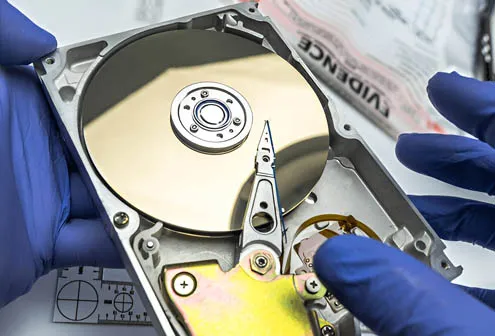
Uncovering the Unseen: The 2026 Guide to Memory and Disk Forensics
When a breach is detected, the clock starts ticking. Traditional security logs can tell you when an event occurred, but they rarely show the full story. To understand the “How” and “Who,” investigators must dive into the physical reality of the machine. This is the realm of Digital Forensics—a binary archaeology that uncovers traces the attacker thought were erased.
At Asguardian Shield, we emphasize a dual-track investigation strategy: Memory Analysis for immediate, live-state evidence and Disk Analysis for long-term, historical reconstruction.
The Forensic Choice: Memory vs. Disk
Summary: Digital forensics is split into two primary disciplines: Memory Forensics (analyzing volatile RAM) and Disk Forensics (analyzing persistent storage).1 Memory analysis is critical for detecting modern “fileless” malware, active network connections, and decrypted credentials that only exist while the system is powered on.2 Disk analysis focuses on the “footprints” left behind—deleted files, registry changes, and system logs.3 In 2026, a forensically sound investigation always begins with Memory Acquisition first, as shutting down a machine to pull a disk image instantly destroys the most valuable volatile evidence.
1. Memory Forensics: The Live State of the Incident
Memory (RAM) is the “crime scene” where the criminal is still in the building. Because it is volatile, it must be captured before the system is rebooted or powered down.4
Key Artifacts Found in Memory:
- Active Processes: Identifies hidden or “unlinked” processes that don’t appear in the Task Manager.
- Network Connections: Reveals Command & Control (C2) communication happening in real-time.
- Loaded Modules (DLLs): Detects malicious code injected into legitimate processes (e.g.,
explorer.exe).5 - Encryption Keys: Often, BitLocker keys or SSL certificates can be scraped from memory in plaintext.6
- User Credentials: Plaintext passwords or NTLM hashes from the
lsass.exeprocess.
The 2026 Technique: eBPF Memory Monitoring
In advanced investigations, we use eBPF-based triggers to capture specific memory segments the moment a suspicious system call is made, ensuring we catch “bursty” malware that only appears in RAM for milliseconds.
2. Disk Forensics: The Historical Record
Once the volatile data is safe, we turn to the disk. This is a bit-by-bit reconstruction of everything that has ever been written to the storage media.
The Pillars of Disk Analysis:
- Forensic Imaging: Using a Hardware Write-Blocker (like Tableau) to create a bit-for-bit clone (
E01orRawformat). We never analyze the original disk; we analyze the copy.7 - File System Analysis: Navigating MFT (Master File Table) entries to find where files were stored, moved, or renamed.
- Data Carving: Reconstructing files from “unallocated space”—even if the attacker deleted the file and emptied the recycle bin.8
- Registry Forensics: Analyzing the “DNA” of the OS to see which USB drives were plugged in, which programs were run, and how the malware achieved persistence.
3. Comparison: Memory vs. Disk Analysis
| Feature | Memory Forensics (RAM) | Disk Forensics (HDD/SSD) |
| Data Type | Volatile (Lost at power-off) | Persistent (Saved at power-off) |
| Primary Goal | Detecting active threats/malware | Reconstructing history/file recovery |
| Acquisition | Must be done on a “Live” system | Can be done “Offline” (machine off) |
| Integrity | Difficult (Capture alters memory) | High (Write-blockers prevent change) |
| 2026 Relevance | Vital for Fileless/Ransomware | Vital for Insider Threats/Fraud |
4. The Forensic Workflow: Order of Volatility
At Asguardian Shield, our investigators follow the RFC 3227 Order of Volatility. You must collect the most “fragile” evidence first.
- Registers & Cache: (Processor state)
- Routing Table, ARP Cache, Process Table: (Live network & system state)
- Memory (RAM): (The primary volatile artifact)9
- Temporary File Systems: (Swap/page files)10
- Disk (HDD/SSD): (Non-volatile storage)
- Remote Logs & Archive Media: (Off-system records)
5. Strategic 2026 Challenges: SSDs and Encryption
Forensics in 2026 faces two major hurdles:
- SSD Wear Leveling/TRIM: Modern SSDs automatically “clean” deleted data blocks, making traditional data carving significantly harder than on old HDDs.11
- Cloud Persistence: In SASE Architecture or Serverless environments, there is no “disk” to pull. Investigators must rely on cloud-native snapshotting and log aggregation from CSPM tools.
Conclusion: The Binary Truth
Investigation is an art backed by rigorous science. By mastering the nuances of both memory and disk forensics, you ensure that no move by an adversary goes unrecorded. At Asguardian Shield, we don’t just find the breach; we prove exactly how it happened, ensuring that the evidence is admissible, the root cause is identified, and the enterprise is truly secured.
Do you have an active incident requiring forensic expertise?
Contact Asguardian Shield for immediate Digital Forensics and Incident Response (DFIR) support. We’ll help you preserve the evidence and uncover the truth.
- Use forensic findings to refine your SIEM Tuning and Alert Noise Reduction.
- For industry-standard guidelines, refer to the NIST Guide to Integrating Forensic Techniques into Incident Response (SP 800-86).