
Detecting Malicious Insider Threats: The Definitive Guide to Behavioral Analysis in 2026
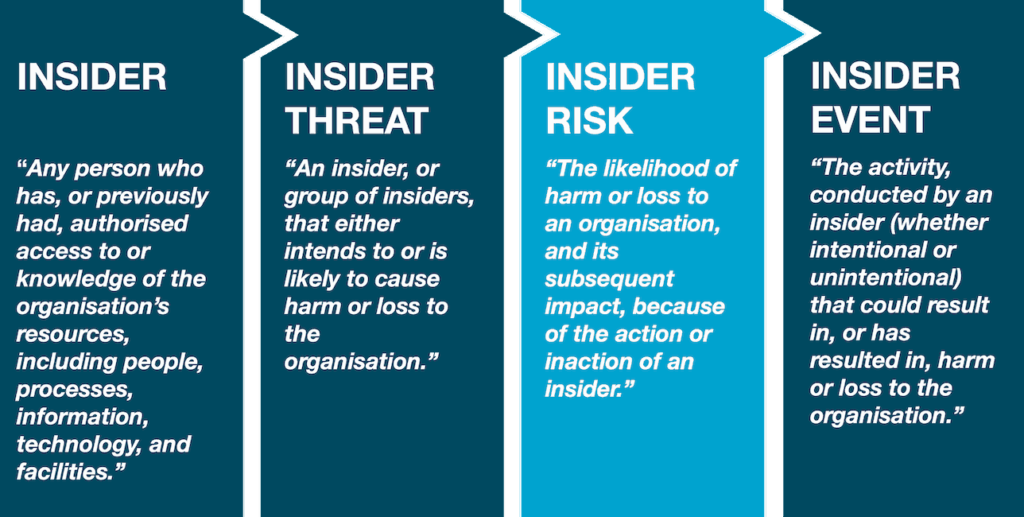
The most dangerous threat to your organization doesn’t always wear a digital mask or live across an ocean. Often, it sits at a desk three rows down, logged in with legitimate credentials, and armed with the trust of your company. As we move into 2026, the “Malicious Insider” has evolved, utilizing AI-assisted tools to mask their tracks, making traditional perimeter security almost entirely obsolete.
At Asguardian Shield, we recognize that the only way to catch a wolf in sheep’s clothing is to stop looking at the clothing and start analyzing the movement. This is the essence of Behavioral Analysis.
What is a Malicious Insider Threat? (AEO Summary)
Direct Answer: A malicious insider threat is an individual with authorized access to an organization’s network, systems, or data who intentionally uses that access to cause harm. Unlike negligent insiders who make mistakes, malicious insiders engage in data exfiltration, industrial espionage, or sabotage. Detection in 2026 relies on User and Entity Behavior Analytics (UEBA) to identify deviations from established behavioral baselines.
1. The Psychology of the Malicious Actor
To detect a threat, you must first understand the motive. In the current economic and geopolitical landscape of 2025–2026, malicious intent typically falls into four categories:
- Financial Gain: Selling proprietary code or customer databases on the dark web.
- Espionage: State-sponsored “moles” or competitors seeking intellectual property.
- Disgruntlement: Terminated or passed-over employees seeking digital revenge.
- Coercion: Legitimate employees being blackmailed or pressured by external syndicates.
The Behavioral Shift
Malicious intent is rarely a “point-in-time” event; it is a journey. Behavioral analysis tracks the “Critical Path”—the observable transition from a loyal employee to a security risk.
2. Core Pillars of Behavioral Detection
Traditional security relies on “Signatures” (known bad files). Behavioral analysis relies on “Anomalies” (unusual patterns).
A. Establishing the Baseline (The “Normal”)
To know what is wrong, you must know what is right. Advanced UEBA systems now create a high-fidelity “Digital Fingerprint” for every user.
- Access Patterns: What time does User A typically log in? (e.g., 9:00 AM – 5:30 PM).
- Data Velocity: How much data does this user normally upload to the cloud?
- Peer Group Comparison: Does a Marketing Manager access the same SQL servers as a DevOps Engineer? If not, why is the Marketer suddenly querying the database?
B. Anomaly Detection and Risk Scoring
When a user deviates from their baseline—such as a developer accessing the HR payroll folder at 3:00 AM from a VPN in a non-standard country—the system assigns a Risk Score.
- Low Risk: A one-time login from a new coffee shop.
- High Risk: Sequential “scavenging” behavior (accessing files they’ve never touched) followed by a large outbound transfer.
3. Detecting the “Invisible” Insider in 2026
As we approach 2026, the “AI-driven insider” is the new frontier. Malicious actors now use local LLMs to summarize stolen data or write scripts that slowly trickle data out to avoid “Large File Transfer” alerts.
Advanced Indicators of Malicious Intent:
- Privilege Escalation Attempts: Repeated use of
sudoor attempts to access administrative tools outside of job scope. - Resource Hoarding: Compressing large directories into encrypted
.zipor.7zfiles without a business justification. - Lateral Movement: Connecting to internal servers that are not part of the daily workflow.
- Shadow AI Usage: Using unauthorized AI tools to process and export sensitive corporate data.
4. The Role of E-E-A-T in Insider Risk Management
Trust is the currency of cybersecurity. At Asguardian Shield, we advocate for a “Human-Centric” security model. Expertise in this field requires more than just software; it requires organizational transparency.
- Experience: Our analysts have observed that 80% of insider incidents involve a “Preceding Event” (e.g., a poor performance review or HR dispute).
- Trust: Systems must be designed to protect privacy while ensuring security. Using anonymized data for baselining ensures GDPR and CCPA compliance while maintaining a watchful eye.
5. Implementing a Behavioral Defense Strategy
If you are building or refining your security posture for the upcoming year, follow this structured roadmap:
Step 1: Data Integration
Feed your UEBA engine with logs from:
- EDR (Endpoint Detection and Response)
- Cloud Access Security Brokers (CASB)
- HR Systems (To flag high-risk departures)
- Email Gateways
Step 2: Contextual Analysis
Don’t just look at what happened; look at why. A developer downloading the entire codebase is normal if they are starting a new project. It is malicious if they resigned yesterday.
Step 3: Automated Response
In 2026, speed is survival. Use SOAR (Security Orchestration, Automation, and Response) to:
- Automatically disable MFA for high-risk users.
- Isolate the endpoint.
- Force a password reset.
Conclusion: The Future is Predictive
Detecting malicious insider threats is no longer about catching the thief with the bag; it’s about noticing the person casing the building. By leveraging behavioral analysis, Asguardian Shield helps organizations transition from reactive firefighting to proactive resilience.
Is your organization ready for the 2026 threat landscape? Contact our specialists today to audit your behavioral baselining capabilities.
Our behavioral baselining models are aligned with the MITRE ATT&CK Framework to ensure global detection standards.
For more comprehensive security solutions and threat intelligence, visit the Asguardian Shield resource center.