
Ransomware 2.0: The Definitive Guide to Double Extortion Defense in 2026

In the high-stakes landscape of 2025, ransomware has evolved from a simple “lock and key” nuisance into a sophisticated, multi-stage extortion industry. If your organization is still relying solely on backups as a safety net, you are prepared for an era of cybercrime that no longer exists.
Welcome to the era of Ransomware 2.0: Double Extortion.
In this definitive guide, we will break down the mechanics of double extortion, why traditional defenses are failing, and the expert-level strategies you need to implement to protect your data, your reputation, and your bottom line.
What is Ransomware 2.0? The Shift to Double Extortion
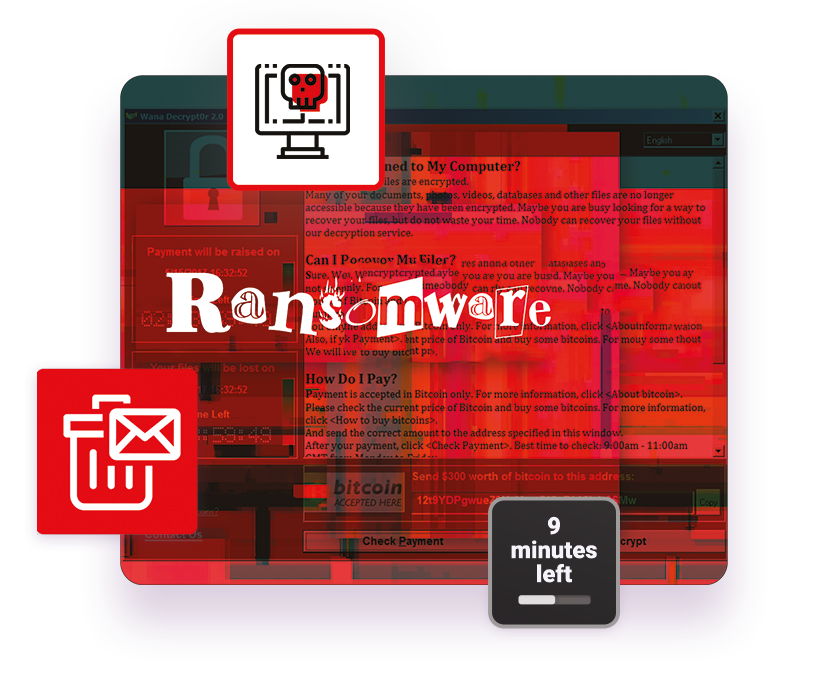
For years, the ransomware playbook was predictable: encrypt files, demand payment for the decryption key, and move on. However, as organizations improved their backup and disaster recovery (BDR) capabilities, they stopped paying.
In response, cybercriminals innovated. Double Extortion (Ransomware 2.0) introduces a critical first step: Data Exfiltration. Before the encryption even begins, attackers quietly siphon off sensitive data—intellectual property, customer records, and internal emails. The threat is no longer just “pay to get your files back”; it is “pay or we will leak your private data to the dark web, notify your regulators, and tell your competitors.”
The Multi-Extortion Hierarchy:
- Encryption (The Original): Locking your systems to halt operations.
- Exfiltration (Double Extortion): Threatening to leak stolen data to destroy your reputation.
- Harassment (Triple Extortion): Contacting your clients, partners, or employees directly to tell them their data has been compromised.
- DDoS (Quadruple Extortion): Launching a denial-of-service attack to keep your website offline while you negotiate.
Why Backups Are No Longer Enough
The most common misconception in modern cybersecurity is that “as long as we have a backup, we’re safe.” In a double extortion scenario, your backup only solves the operational problem (getting back to work). It does absolutely nothing to solve the privacy problem (stolen data).
Once data is exfiltrated, it is out of your control. Even if you restore your systems in ten minutes, the threat of a massive GDPR fine, class-action lawsuits, and loss of brand trust remains.
The 2025 Double Extortion Defense Strategy: A Layered Framework
To defend against Ransomware 2.0, you must move beyond perimeter security and focus on Data Resilience. Here is the expert-level framework for building a modern defense.
1. Zero Trust Architecture: “Never Trust, Always Verify”
The “castle and moat” strategy is dead because attackers are already inside the castle using stolen credentials. A Zero Trust model assumes the network is compromised.
- Micro-segmentation: Divide your network into small, isolated zones. If an attacker gains access to a marketing workstation, they shouldn’t be able to “hop” into the financial server.
- Identity as the Perimeter: Use Phishing-Resistant Multi-Factor Authentication (MFA) like FIDO2 keys. In 2025, standard SMS or push-notification MFA is easily bypassed by “MFA fatigue” attacks.
2. Proactive Data Exfiltration Prevention
Since exfiltration is the “heart” of double extortion, you must make it impossible—or extremely difficult—to move large amounts of data out of your network.
- Endpoint Detection and Response (EDR/XDR): Use AI-driven tools that monitor for “Living off the Land” (LotL) techniques—where attackers use your own admin tools (like PowerShell or WMI) to move data.
- Data Loss Prevention (DLP) Policies: Set strict rules that block or alert when large volumes of sensitive files are uploaded to unrecognized cloud storage sites (Mega, Dropbox, etc.).
- Deception Technology: Deploy “Honeyfiles” or “Honey-credentials.” These are fake files that look like “CEO_Salaries_2025.xlsx.” If anyone touches them, it triggers an instant high-priority alert.
3. Hardened Identity and Access Management (IAM)
Most ransomware attacks don’t “break in”—they “log in.”
- Principle of Least Privilege (PoLP): No user should have more access than they absolutely need for their daily tasks.
- Privileged Access Management (PAM): Admin credentials should be “Just-in-Time.” Admins only get elevated permissions when they need to perform a specific task, and those permissions expire immediately after.
4. Immutable and Air-Gapped Backups
While backups don’t stop the leak, they are still vital for survival.
- Immutability: Use WORM (Write-Once-Read-Many) storage. This ensures that once a backup is written, it cannot be deleted or encrypted—even by an admin account.
- The 3-2-1-1 Rule: 3 copies of data, on 2 different media, with 1 copy off-site and 1 copy offline (air-gapped).
The Anatomy of an Attack: How It Happens
Understanding the “Kill Chain” helps you identify where to place your defenses:
| Phase | Attacker Action | Your Defense |
| Initial Access | Phishing or Vulnerable VPN | MFA & Patch Management |
| Reconnaissance | Mapping the network | Network Segmentation |
| Exfiltration | Stealing sensitive data | DLP & Egress Monitoring |
| Encryption | Deploying the ransomware | EDR/XDR & NGAV |
| Extortion | Sending the ransom note | Incident Response Plan |
Expert Insights: The Legal and Compliance Factor
In 2025, the decision to pay a ransom is no longer just about the money. Under regulations like GDPR, CCPA, and DORA, a “Double Extortion” event is legally a data breach the moment the data is exfiltrated.
Even if you pay the ransom and the attackers promise to delete the data, you are still legally required to report the breach in most jurisdictions. Paying a criminal does not satisfy your legal obligation to protect your customers. Furthermore, several government agencies now warn that paying ransoms may violate sanctions (e.g., OFAC in the US), potentially leading to massive fines on top of the ransom.
Strategic Checklist: Are You Ready for 2026?
If you want to be “Ransomware Resilient,” ensure your board of directors can answer “Yes” to these five questions:
- Do we have a “Data Crown Jewels” map? (Do you know exactly where your most sensitive data is stored?)
- Is our backup infrastructure physically or logically separated from our main network?
- Have we conducted a “Tabletop Exercise” specifically for a double extortion scenario?
- Do we have an Incident Response (IR) firm on retainer? (You don’t want to be signing contracts while your systems are burning.)
- Is our egress traffic (data leaving the company) being monitored for anomalies?
Final Thoughts: Resilience Over Perfection
There is no such thing as 100% security. The goal of a Double Extortion Defense Strategy is not to build an impenetrable wall, but to create an environment so hostile and visible that an attacker cannot steal your data without being caught.
By focusing on identity, segmentation, and exfiltration monitoring, you strip the “Double” out of Double Extortion, leaving the attacker with no leverage and your business with its reputation intact.
Expert Ransomware Defense Resources
Building a Ransomware 2.0 defense is an ongoing process of refinement. To ensure your organization stays ahead of emerging threats like triple and quadruple extortion, we recommend the following next steps:
- Get Specialized Support: For custom security audits and advanced threat protection frameworks, Visit Asguardian Shield to explore our comprehensive security suites.
- Official Guidelines: Review the latest federal directives on ransomware prevention at the CISA StopRansomware Portal .
Disclaimer: Cybersecurity is a rapidly evolving field. For the most up-to-date threat intelligence in 2026, ensure your incident response plans are reviewed quarterly.