
Adaptive & Biometric MFA 2026: The Enterprise Authentication Guide
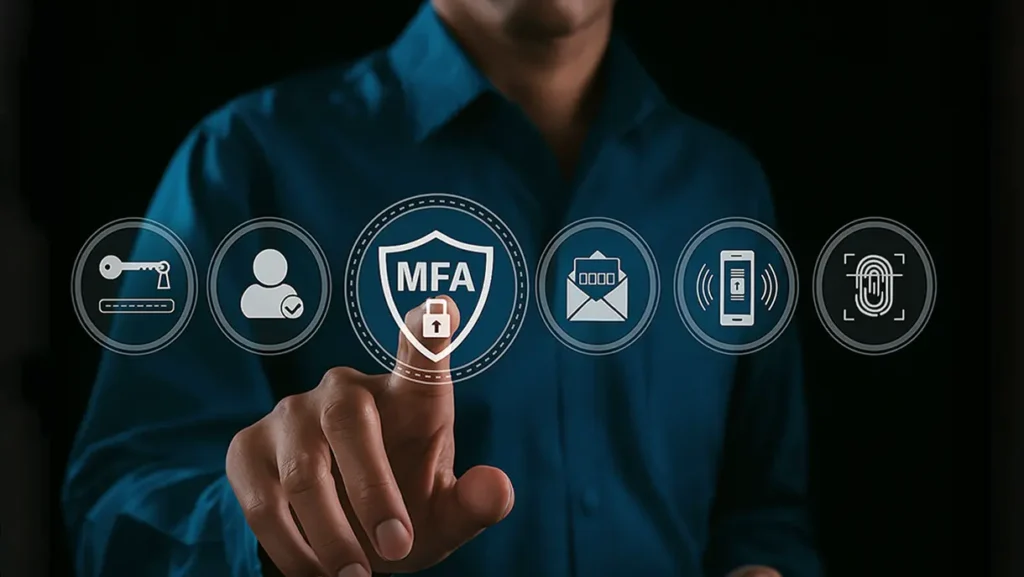
The Death of the Password: Implementing Adaptive & Biometric MFA in 2026
The era of the “standard” password is over. In 2026, static credentials and even traditional SMS-based MFA are the primary targets for AI-driven phishing and session-hijacking attacks. To protect the modern enterprise, authentication must move from something a user remembers to something a user is (Biometrics) combined with the context of the request (Adaptive).
At Asguardian Shield, we view Adaptive & Biometric MFA as the gold standard of identity security. It provides a “Continuous Authentication” model where the system is constantly evaluating risk without interrupting the user’s workflow.
What is Adaptive & Biometric MFA? (Direct Answer)
Summary: Adaptive MFA (also known as Risk-Based Authentication) is a system that uses AI to evaluate contextual signals—such as location, device health, and behavior—to determine the risk level of a login attempt in real-time. Biometric MFA provides the verification layer, using unique physical traits (fingerprints, facial recognition, or iris scans) to prove identity. Combined, they create a Passwordless experience: low-risk logins are seamless, while high-risk attempts trigger a “Step-Up” biometric challenge or are blocked entirely.
1. The Adaptive Engine: Contextual Risk Signals
In 2026, the “Adaptive” part of MFA is powered by machine learning engines that analyze dozens of signals before a user even sees a login prompt.
Key Contextual Signals:
- Device Posture: Is this a managed corporate laptop? Is the OS patched? Is the firewall active?
- Impossible Travel: Did the user log in from London and then 15 minutes later from Singapore?
- Network Reputation: Is the request coming from a known corporate IP or a suspicious Tor exit node?
- Behavioral Biometrics: Does the user’s typing speed, mouse movement, or gait (on mobile) match their historical baseline?
- Time of Access: Is a developer accessing the production database at 3:00 AM on a Sunday?
2. Biometrics 2.0: Beyond the Simple Scan
Biometric authentication has evolved. In 2026, the focus has shifted from “can we read a fingerprint?” to “is this a real human?”
A. FIDO2 and Passkeys
The industry has standardized on FIDO2/WebAuthn. Passkeys use public-key cryptography where the private key never leaves the secure enclave (TPM) of the user’s device.
- Phishing Resistance: Because the passkey is tied to the specific website domain, a fake phishing site cannot trick your device into signing the request.
B. Liveness Detection
To combat deepfakes and high-resolution photos, modern biometric systems use Liveness Detection.
- Active Liveness: Asking the user to blink, smile, or turn their head.
- Passive Liveness: Using AI to detect “skin texture,” heartbeat pulses in the palm, or depth mapping that a 2D screen or mask cannot replicate.
3. The Implementation Matrix: Risk vs. Response
Your authentication policy shouldn’t be a “on/off” switch. It should be a spectrum.
| Risk Level | Context Example | MFA Response |
| Low Risk | Trusted device + Known Office IP + Standard Time | Silent Auth: Access granted with no prompt. |
| Medium Risk | New browser + Familiar location + Working hours | Biometric Check: Prompt for FaceID or Fingerprint. |
| High Risk | Unknown device + New country + Sensitive resource | Step-Up: Biometric + Hardware Key (YubiKey). |
| Critical Risk | Blacklisted IP + Impossible Travel | Deny: Access blocked; security team alerted. |
4. Addressing the 2026 Biometric Challenges
As with any technology, Biometrics come with unique hurdles that Asguardian Shield helps you navigate:
- The “Irrevocability” Problem: You cannot change your fingerprint if it is stolen.
- Solution: Never store raw biometric images. Store Salted Cryptographic Hashes or use “On-Device” biometrics (where the server never even sees the biometric data).
- Deepfake Threats: AI can now mimic voices and faces with terrifying accuracy.
- Solution: Implement multi-modal biometrics (e.g., Face + Voice) and combine them with SASE Architecture signals.
- Accessibility and Bias: Some biometric systems struggle with certain skin tones or physical disabilities.
- Solution: Always provide a secure fallback method, such as a FIDO2-compliant hardware security key.
5. Strategic Roadmap for CISO’s
Moving to an Adaptive & Biometric model is a phased journey:
- Inventory Identity Sprawl: Use Identity Governance (IGA) to see every human and non-human identity.
- Pilot Passwordless: Start with high-value targets (IT Admins, Finance) and move them to FIDO2 passkeys.
- Define Your Risk Tiers: Create your adaptive policies based on the sensitivity of your applications.
- Educate the Workforce: Shift the culture from “What is my password?” to “How do I secure my device?”
Conclusion: Trust is Earned, Not Given
In the 2026 digital era, identity is the new perimeter. Implementing Adaptive & Biometric MFA allows your organization to build a high-trust environment where security is a silent, intelligent partner rather than a frustrating barrier. By verifying the user, the device, and the context, Asguardian Shield ensures that your enterprise remains impenetrable.
Are you still relying on vulnerable passwords?
Contact Asguardian Shield for an Authentication Modernization Audit. We’ll help you implement a phishing-resistant, passwordless future today.
- Integrate your authentication strategy with our CISO’s Roadmap to Zero Trust.
- Review the latest technical specifications from the FIDO Alliance on Passkeys.