
Shared Responsibility Model 2026: The Cloud Governance & Security Guide
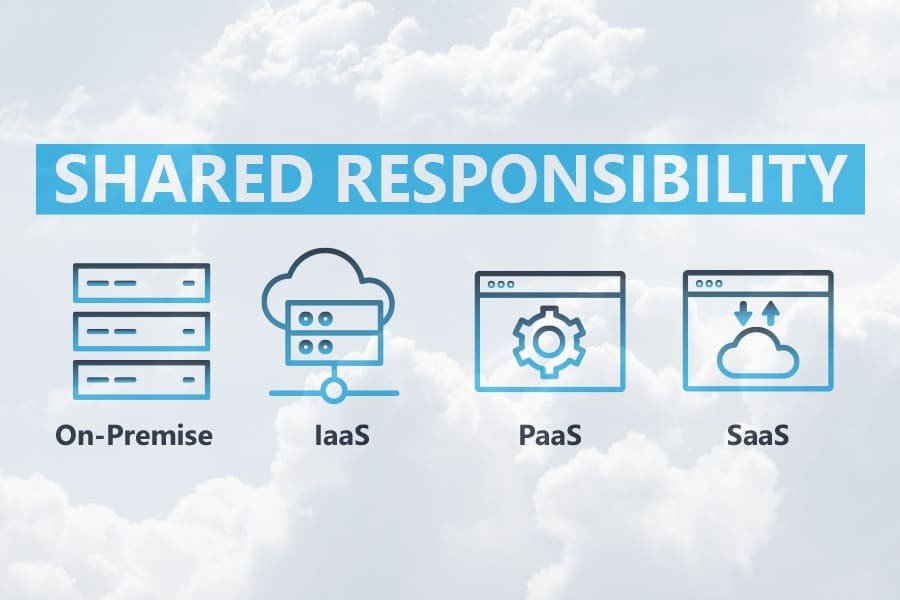
Beyond On-Premise: Mastering the Shared Responsibility Model for Modern Cloud Governance
As we move deeper into 2026, the migration to the cloud is no longer a “transformation”—it is the standard operating environment. However, many organizations still fall victim to the “Cloud Paradox”: the belief that because a service is “in the cloud,” the provider is inherently responsible for its security.
This misconception is the leading cause of high-profile data breaches. In reality, cloud security is a partnership. The Shared Responsibility Model is the legal and technical framework that defines where the provider’s duties end and your organization’s governance begins. At Asguardian Shield, we advocate for a “Governance-First” approach to the cloud, ensuring that accountability is never left to chance.
Defining the Shared Responsibility Model (Direct Answer)
Summary: The Shared Responsibility Model is a cloud security framework that divides security obligations between the Cloud Service Provider (CSP) and the Customer. Generally, the CSP is responsible for the Security OF the Cloud (physical facilities, hardware, and the virtualization layer). The customer is responsible for Security IN the Cloud (data protection, identity management, and application configuration). In 2026, this model has expanded to include AI Shared Responsibility, where customers are also accountable for prompt security, model training data, and AI output governance.
1. The Division of Duties: IaaS, PaaS, and SaaS
The “line of responsibility” shifts significantly depending on the service model you choose. Understanding this shift is the first step in effective cloud governance.
Infrastructure as a Service (IaaS)
In IaaS (e.g., AWS EC2, Azure VMs), you have the most control and the most responsibility.
- Provider: Secures the data center, the physical servers, and the hypervisor.
- You: Responsible for the Operating System (OS) patching, the applications, the network configuration (firewalls), and all data.
- Governance Risk: High. Failure to patch a guest OS is a common entry point for ransomware.
Platform as a Service (PaaS)
In PaaS (e.g., Azure SQL, Google App Engine), the provider manages more of the stack.
- Provider: Secures the OS and the middleware.
- You: Responsible for the security of your specific application code and the data it processes.
- Governance Risk: Moderate. Focus shifts to API security and data access permissions.
Software as a Service (SaaS)
In SaaS (e.g., Microsoft 365, Salesforce), the provider handles almost everything.
- Provider: Secures the entire stack from hardware to application.
- You: Wholly responsible for Identity and Access Management (IAM) and the data within the app.
- Governance Risk: Deceptive. Many assume “zero responsibility,” but a single misconfigured user permission can expose an entire database.
2. The New Frontier: AI Shared Responsibility in 2026
With the rise of Agentic AI and Large Language Models (LLMs), a new layer has been added to the model.
- Provider Responsibility: Securing the massive compute clusters, the base model integrity, and platform-level safeguards against model tampering.
- Customer Responsibility:
- Data Sanitization: Ensuring PII (Personally Identifiable Information) isn’t leaked into model training or prompts.
- Prompt Injection Defense: Monitoring for malicious inputs that try to bypass AI guardrails.
- Output Governance: Verifying AI-generated code or content for vulnerabilities before it goes to production.
3. Comparison Table: Responsibility Breakdown
| Asset / Layer | On-Premise | IaaS | PaaS | SaaS |
| Physical Facilities | Customer | Provider | Provider | Provider |
| Physical Hardware | Customer | Provider | Provider | Provider |
| Virtualization | Customer | Provider | Provider | Provider |
| Operating System | Customer | Customer | Provider | Provider |
| Network Controls | Customer | Customer | Shared | Provider |
| Applications | Customer | Customer | Customer | Provider |
| Identity / IAM | Customer | Customer | Customer | Customer |
| Data / Content | Customer | Customer | Customer | Customer |
4. Best Practices for Cloud Governance
Effective governance ensures that your team is meeting their side of the bargain. Asguardian Shield recommends these four pillars of cloud oversight:
A. Centralized Identity and Access Management (IAM)
Regardless of the model (IaaS or SaaS), Identity is the new perimeter.
- Action: Enforce Multi-Factor Authentication (MFA) and “Just-in-Time” access. Use a unified identity provider (IdP) to manage access across multiple clouds to prevent “permission sprawl.”
B. Continuous Compliance & CSPM
Cloud environments change in seconds. Manual audits are no longer effective.
- Action: Deploy Cloud Security Posture Management (CSPM) tools to automatically scan for misconfigurations (like open S3 buckets) and audit them against frameworks like CIS, NIST, or ISO 27001.
C. Data Sovereignty and Encryption
You own the data; therefore, you own the risk of its exposure.
- Action: Encrypt all data at rest (AES-256) and in transit (TLS 1.3). In 2026, pay close attention to Data Sovereignty rules—ensure your provider isn’t moving sensitive data across borders without your knowledge.
D. Automated Policy as Code (PaC)
Governance should be proactive, not reactive.
- Action: Use tools like Terraform Sentinel or AWS Config to create “guardrails.” If a developer tries to launch an insecure resource, the system should automatically block it before it goes live.
5. The Role of Visibility in Governance
In 2026, “blind spots” are the biggest threat to the Shared Responsibility Model. If you have “Shadow IT”—cloud accounts created by departments outside of IT—you are still responsible for them, even if you don’t know they exist.
Authoritative Insight: Successful governance requires a centralized Asset Inventory. You must have a single view of every cloud resource, user, and API across your entire infrastructure. This is the only way to ensure that your side of the responsibility “line” is secure.
Conclusion: Trust, but Verify
The Shared Responsibility Model is designed to make security easier by offloading the heavy lifting of physical infrastructure to experts like AWS, Azure, and Google. However, it is not a “get out of jail free” card for security. Your organization remains the ultimate steward of its data and its identity.
Is your cloud governance strategy ready for 2026?
Contact Asguardian Shield for a comprehensive Cloud Risk Assessment. We help you define your boundaries, automate your compliance, and secure your future in the cloud.
- Align your cloud strategy with your network’s core by returning to the Asguardian Shield Home Page.
- For the definitive architectural breakdown, review the NIST Cloud Computing Reference Architecture.